
Erik Kwakkel

Professor | Minor in Informatics Program Chair
phone 604 822 4448
location_on IKBLC 496
launchWebsite
file_download Download CV

About

I’m a Professor at the University of British Columbia’s School of Information, where I teach and conduct research on the history of the book. My primary interests lie in book design and communication in the pre-modern world, particularly how information was disseminated and consumed before the introduction of the printing press in Europe. However, my research and teaching have broadened to encompass cultural disciplines like digital humanities, the digitization of cultural heritage, visual arts, history, and cultural studies. A multidisciplinary approach is a hallmark of my scholarly output, teaching, and outreach projects beyond the university.

I maintain an active research program in the culture of reading and book production in the age of the handwritten book. Both in my research and teaching I highlight the relationship between the physical appearance of manuscripts and the contexts in which they were produced and used. Overarching questions that drive my work are: What does book design reveal about how information was consumed? What is the relationship between text and material design? Can the setting of use, or the kind of reader, be gleaned from how the page and the material book more generally was designed? What is the impact of geography and temporal space on the appearance of manuscripts?

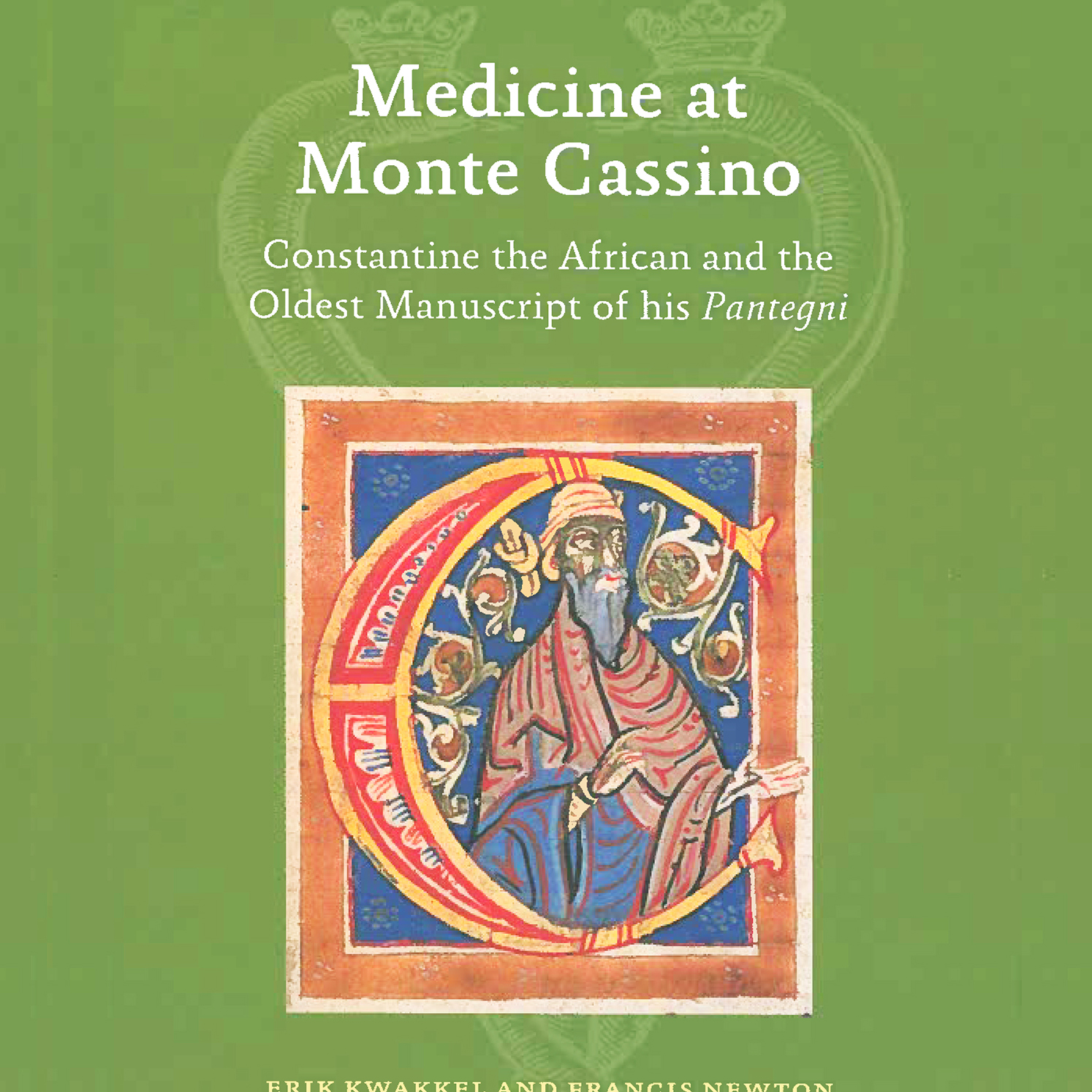
I have addressed these questions in a range of publications, including edited volumes and monographs, some of which were published in open access (Turning Over a New Leaf, 2012, and Manuscripts of the Latin Classics, 2015). The relationship of book design and how manuscripts were used features prominently in my 2018 textbook, Books Before Print, which is designed for undergraduate and graduate students. I have also worked extensively on medieval books of medicine, culminating in the monograph Medicine at Monte Cassino (Turnhout, Belgium: Brepols Publishers, 2019), co-authored with Francis Newton. I recently finished a monograph titled Writing on the Wall: Advertisement Sheets and the Business of Writing, which is devoted to advertising practices of medieval scribes (under review). I am currently completing a monograph on the scribal activities of Peter Schoeffer, who was hired to help refine the type of Johannes Gutenberg, but was a paid scribe in Paris before then.

Recognized as international expert in medieval manuscripts, I held several major research grants, including for “Turning Over a New Leaf” (Leiden University, 2010-15), in which a team of experts studied major shifts in manuscript production during the Long Twelfth Century. I have held appointments as visiting scholar at the University of Oxford, where I was Lowe Lecturer in 2014, the University of Iceland, and the University of Alberta, and I frequently teach codicology and paleography in summer/winterschools and graduate classes in North America and Europe. In 2015 I became an elected member of the Comité International de Paléographie Latine (CIPL).

My work has featured on TV, radio, and in national and international news outlets, including National GeographicBBC World Service, CBC radio, National Public RadioCNN, and the Smithsonian Journal.


Teaching


Research

  • History of the Book
  • Book Design and Communication
  • Digital Humanities
  • Digitization of Cultural Heritage
  • Dissemination of Information


Publications

A complete list of publications is found in my CV.

Selected publications since 2018

  • Erik Kwakkel, “The Pamplona Bibles: A New Member of the Family,” Florilegium 37 (2020) [appeared in 2024], 54-66.
  • “The Enigma of Medieval Letters,” in Enigmas, ed. Robin Reuters & Emily Joan Ward (Cambridge: Cambridge University Press, 2022), 124-47
  • Erik Kwakkel, “The Pro-Active Scribe: Preparing the Margins of Annotated Manuscripts,” in Glossator 12 (2022), 11-47 Special Issue, Commenting and Commentary as an Interpretive Mode in Medieval and Early Modern Europe, ed. Christina Lechtermann & Markus Stock. Open Access.
  • Erik Kwakkel and F. Newton, Medicine at Monte Cassino (Turnhout, Belgium: Brepols Publishers, 2019) [link]
  • Erik Kwakkel, Books Before Print (Kalamazoo & Bradford: Arc Humanities Press, forthcoming September 2018) [link]
  • Erik Kwakkel and Rodney Thomson, eds., The European Book in the Twelfth Century (Cambridge: Cambridge University Press, 2018) [link]
  • Erik Kwakkel, Ed., Vernacular Manuscript Culture 1000-1500 (Leiden: Leiden University Press, 2018) [link]
  • Erik Kwakkel, “Book Script,” in The European Book in the Twelfth Century, ed. Erik Kwakkel and Rodney Thomson (Cambridge: Cambridge University Press, 2018), 24-42
  • Erik Kwakkel, “The Margin as Editorial Space: Upgrading Dioscorides alphabeticus in Eleventh-Century Monte Cassino,” in The Annotated Book in the Early Middle Ages: Practices of Reading and Writing, ed. Irene van Renswoude and Mariken Teeuwen, Utrecht Studies in Medieval Literacy (Turnhout: Brepols, 2018), 357-374

Publications 2015-2018

Books Authored

  • Erik Kwakkel & Francis Newton, Medicine at Monte Cassino: Constantine the African and the Oldest Manuscript of his ‘Liber pantegni’ (Turnhout: Brepols, forthcoming)
  • Erik Kwakkel, Books Before Print (Leeds, Arc Humanities, forthcoming September 2018)

Books Edited

  • Erik Kwakkel & Rodney Thomson (eds.), The European Book in the Twelfth Century (Cambridge: Cambridge University Press, 2018)
  • Erik Kwakkel (ed.), Vernacular Manuscript Culture 1000-1500 (Leiden: Leiden University Press, 2018)
  • Erik Kwakkel (ed), Manuscripts of the Latin Classics 800-1200, Studies in Medieval and Renaissance Book Culture (Leiden: Leiden University Press, 2015)

Journal Articles

  • Jorien Duivenvoorde, Anna Käyhkö, Erik Kwakkel & Joris Dik, “Hidden Library: Visualizing Fragments of Medieval Manuscripts in Early-Modern Bookbindings with mobile Macro-XRF Scanner,” Heritage Science 2017 5:6

Contributions to Books

  • Erik Kwakkel, “Hadewijch Manuscripts,” in Companion to Hadewijch, ed. Patricia Dailey and Veerle Fraters (Leiden: Brill, forthcoming)
  • Erik Kwakkel, “Book Script,” in The European Book in the Twelfth Century, ed. Erik Kwakkel and Rodney Thomson (Cambridge: Cambridge University Press, 2018), 24-42
  • Erik Kwakkel & Rodney Thomson, “Codicology,” in The European Book in the Twelfth Century, ed. Erik Kwakkel and Rodney Thomson (Cambridge: Cambridge University Press, 2018), 9-24
  • Erik Kwakkel & Rodney Thomson, “Introduction,” in The European Book in the Twelfth Century, ed. Erik Kwakkel and Rodney Thomson (Cambridge: Cambridge University Press, 2018), 1-6
  • Erik Kwakkel, “The Margin as Editorial Space: Upgrading Dioscorides alphabeticus in Eleventh-Century Monte Cassino,” in The Annotated Book in the Early Middle Ages: Practices of Reading and Writing, ed. Irene van Renswoude and Mariken Teeuwen, Utrecht Studies in Medieval Literacy (Turnhout: Brepols, 2018), 357-374
  • Erik Kwakkel & Anne Korteweg, “De wereld van het klooster,” in Zuid-Nederlandse miniatuurkunst. De mooiste verluchte handschriften in Nederlands bezit, ed. Anne Margreet As-Vijvers and Anne Korteweg (Zwolle: Waanders, 2018), 36-59
  • Erik Kwakkel & Anne Korteweg, “The Monastic World,” in Splendour of the Burgundian Netherlands. Southern Netherlandish Illuminated  Manuscripts in Dutch Collections, ed. Anne Margreet As-Vijvers and Anne Korteweg (Zwolle: Waanders, 2018), 36-59
  • Erik Kwakkel, “Lezen in de marge: Enkele ontwikkelingen in middeleeuwse boeken,” in Lezen!, ed. Wim van Anrooij and Paul Hoftijzer (Hilversum: Verloren, 2017), 13-18
  • Erik Kwakkel, “De triomf van de paleografische anomalie: Klerken als kopiisten van Middelnederlandse literatuur”, in Schriftgeheimen, ed. Paul Dijstelberghe, Marjolein Hogenbirk en Lisa Kuitert (Amsterdam: Amsterdam University Press, 2017), 105-120
  • Erik Kwakkel, “Filling a Void: The Use of Marginal Space in Medieval Books,” in Reactions: Medieval/Modern, ed. Dot Porter (Philadelphia: University of Pennsylvania Libraries, 2016), 19-30
  • Erik Kwakkel, “Decoding the Material Book: Cultural Residue in Medieval Manuscripts,” in The Medieval Manuscript Book: Cultural Approaches, ed. Michael Van Dussen and Michael Johnson (Cambridge: Cambridge University Press, 2015), 60-76
  • Erik Kwakkel, “Manuscripts of the Latin Classics: An Introduction,” in Manuscripts of the Latin Classics 800-1200, ed. Erik Kwakkel (Leiden: Leiden University Press, 2015), 13-22
  • Erik Kwakkel, “Classics on Scraps: Classical Manuscripts Made from Parchment Waste in the Eleventh and Twelfth Centuries,” in Manuscripts of the Latin Classics 800-1200, ed. Erik Kwakkel, Studies in Medieval and Renaissance Book Culture (Leiden: Leiden University Press, 2015), 107-30, 204-11

Publications for non-specialists (English only):

  • Erik Kwakkel, “Medieval Doodles,” in Jessica Firpi and Wendy A. Reynolds, Ripley’s Believe it or Not: Unlock the Weird (Orlando, FL: Ripley Entertainment, 2016), 198
  • Interview for WordPress: “Medieval History, Illuminated: Book Historian Erik Kwakkel Uncovers the Past Through Books” (Feb. 2016) [link]
  • “Books and the Dissemination of Knowledge in Medieval Europe,” two learning modules for Khan Academy. Published 4 Jan. 2015

Podcast:

  • Darwin Lecture, “The Enigmatic Premodern Book,” Darwin College, Cambridge (February 21, 2020) [link]

Radio

  • BBC World Service, Outlook, “The Sherlock Holmes of Medieval Manuscripts?, personal story of my becoming a book historian (27 March 2017) [link]
  • CBC Canada National Radio, “As it Happens”: Interview about doodling in medieval manuscripts (13 Dec. 2014) [link]
  • National Public Radio, How to Do Everything: Interview about doodling in medieval manuscripts (30 Sept. 2014) [link]

Magazines and Newspapers (English only)

  • Don’t Take Pictures (1 Sept. 2016): “Bookmarks: The Hidden Library” [link]
  • BBC News: “The Secret Libraries of History”, featuring my research of fragments inside bookbindings (19 Aug. 2016) [link]
  • The Guardian, “X-rays reveal 1,300-year-old writings inside later bookbindings” (5 June 2016) [link to online version]
  • Smithsonian Magazine, “Annals of Doodlology” (Feb. 2015, p. 18)
  • The Times, article devoted to medieval pen trials (6 Oct. 2014)
  • The Independent on Sunday, full page on medieval pen trials, including interview (5 Oct. 2014) [link to online version]
  • Slate: The Vault, “Costume Catalogue from 16th-century France” (31 Dec. 2014) [link]
  • CNN News, “ Gold mine of cheeky medieval doodles show ancestors just as silly as us” (3 Nov. 2014) [link]
  • Daily Mail, “Medieval doodles” (5 Oct. 2014) [link]
  • People Magazine, piece devoted to medieval pen trials (“People In the Middle Ages Doodled Just like us” (3 Oct. 2014)
  • BuzzFeed: 8 historians, curators, specialists, and librarians who are killing it online (Feb. 2014) [link].

Office Hours

By appointment (please send an email to erik.kwakkel@ubc.ca to schedule an appointment)


Erik Kwakkel

Professor | Minor in Informatics Program Chair
phone 604 822 4448
location_on IKBLC 496
launchWebsite
file_download Download CV

About

I’m a Professor at the University of British Columbia’s School of Information, where I teach and conduct research on the history of the book. My primary interests lie in book design and communication in the pre-modern world, particularly how information was disseminated and consumed before the introduction of the printing press in Europe. However, my research and teaching have broadened to encompass cultural disciplines like digital humanities, the digitization of cultural heritage, visual arts, history, and cultural studies. A multidisciplinary approach is a hallmark of my scholarly output, teaching, and outreach projects beyond the university.

I maintain an active research program in the culture of reading and book production in the age of the handwritten book. Both in my research and teaching I highlight the relationship between the physical appearance of manuscripts and the contexts in which they were produced and used. Overarching questions that drive my work are: What does book design reveal about how information was consumed? What is the relationship between text and material design? Can the setting of use, or the kind of reader, be gleaned from how the page and the material book more generally was designed? What is the impact of geography and temporal space on the appearance of manuscripts?

I have addressed these questions in a range of publications, including edited volumes and monographs, some of which were published in open access (Turning Over a New Leaf, 2012, and Manuscripts of the Latin Classics, 2015). The relationship of book design and how manuscripts were used features prominently in my 2018 textbook, Books Before Print, which is designed for undergraduate and graduate students. I have also worked extensively on medieval books of medicine, culminating in the monograph Medicine at Monte Cassino (Turnhout, Belgium: Brepols Publishers, 2019), co-authored with Francis Newton. I recently finished a monograph titled Writing on the Wall: Advertisement Sheets and the Business of Writing, which is devoted to advertising practices of medieval scribes (under review). I am currently completing a monograph on the scribal activities of Peter Schoeffer, who was hired to help refine the type of Johannes Gutenberg, but was a paid scribe in Paris before then.

Recognized as international expert in medieval manuscripts, I held several major research grants, including for “Turning Over a New Leaf” (Leiden University, 2010-15), in which a team of experts studied major shifts in manuscript production during the Long Twelfth Century. I have held appointments as visiting scholar at the University of Oxford, where I was Lowe Lecturer in 2014, the University of Iceland, and the University of Alberta, and I frequently teach codicology and paleography in summer/winterschools and graduate classes in North America and Europe. In 2015 I became an elected member of the Comité International de Paléographie Latine (CIPL).

My work has featured on TV, radio, and in national and international news outlets, including National GeographicBBC World Service, CBC radio, National Public RadioCNN, and the Smithsonian Journal.


Teaching


Research

  • History of the Book
  • Book Design and Communication
  • Digital Humanities
  • Digitization of Cultural Heritage
  • Dissemination of Information


Publications

A complete list of publications is found in my CV.

Selected publications since 2018

  • Erik Kwakkel, “The Pamplona Bibles: A New Member of the Family,” Florilegium 37 (2020) [appeared in 2024], 54-66.
  • “The Enigma of Medieval Letters,” in Enigmas, ed. Robin Reuters & Emily Joan Ward (Cambridge: Cambridge University Press, 2022), 124-47
  • Erik Kwakkel, “The Pro-Active Scribe: Preparing the Margins of Annotated Manuscripts,” in Glossator 12 (2022), 11-47 Special Issue, Commenting and Commentary as an Interpretive Mode in Medieval and Early Modern Europe, ed. Christina Lechtermann & Markus Stock. Open Access.
  • Erik Kwakkel and F. Newton, Medicine at Monte Cassino (Turnhout, Belgium: Brepols Publishers, 2019) [link]
  • Erik Kwakkel, Books Before Print (Kalamazoo & Bradford: Arc Humanities Press, forthcoming September 2018) [link]
  • Erik Kwakkel and Rodney Thomson, eds., The European Book in the Twelfth Century (Cambridge: Cambridge University Press, 2018) [link]
  • Erik Kwakkel, Ed., Vernacular Manuscript Culture 1000-1500 (Leiden: Leiden University Press, 2018) [link]
  • Erik Kwakkel, “Book Script,” in The European Book in the Twelfth Century, ed. Erik Kwakkel and Rodney Thomson (Cambridge: Cambridge University Press, 2018), 24-42
  • Erik Kwakkel, “The Margin as Editorial Space: Upgrading Dioscorides alphabeticus in Eleventh-Century Monte Cassino,” in The Annotated Book in the Early Middle Ages: Practices of Reading and Writing, ed. Irene van Renswoude and Mariken Teeuwen, Utrecht Studies in Medieval Literacy (Turnhout: Brepols, 2018), 357-374

Publications 2015-2018

Books Authored

  • Erik Kwakkel & Francis Newton, Medicine at Monte Cassino: Constantine the African and the Oldest Manuscript of his ‘Liber pantegni’ (Turnhout: Brepols, forthcoming)
  • Erik Kwakkel, Books Before Print (Leeds, Arc Humanities, forthcoming September 2018)

Books Edited

  • Erik Kwakkel & Rodney Thomson (eds.), The European Book in the Twelfth Century (Cambridge: Cambridge University Press, 2018)
  • Erik Kwakkel (ed.), Vernacular Manuscript Culture 1000-1500 (Leiden: Leiden University Press, 2018)
  • Erik Kwakkel (ed), Manuscripts of the Latin Classics 800-1200, Studies in Medieval and Renaissance Book Culture (Leiden: Leiden University Press, 2015)

Journal Articles

  • Jorien Duivenvoorde, Anna Käyhkö, Erik Kwakkel & Joris Dik, “Hidden Library: Visualizing Fragments of Medieval Manuscripts in Early-Modern Bookbindings with mobile Macro-XRF Scanner,” Heritage Science 2017 5:6

Contributions to Books

  • Erik Kwakkel, “Hadewijch Manuscripts,” in Companion to Hadewijch, ed. Patricia Dailey and Veerle Fraters (Leiden: Brill, forthcoming)
  • Erik Kwakkel, “Book Script,” in The European Book in the Twelfth Century, ed. Erik Kwakkel and Rodney Thomson (Cambridge: Cambridge University Press, 2018), 24-42
  • Erik Kwakkel & Rodney Thomson, “Codicology,” in The European Book in the Twelfth Century, ed. Erik Kwakkel and Rodney Thomson (Cambridge: Cambridge University Press, 2018), 9-24
  • Erik Kwakkel & Rodney Thomson, “Introduction,” in The European Book in the Twelfth Century, ed. Erik Kwakkel and Rodney Thomson (Cambridge: Cambridge University Press, 2018), 1-6
  • Erik Kwakkel, “The Margin as Editorial Space: Upgrading Dioscorides alphabeticus in Eleventh-Century Monte Cassino,” in The Annotated Book in the Early Middle Ages: Practices of Reading and Writing, ed. Irene van Renswoude and Mariken Teeuwen, Utrecht Studies in Medieval Literacy (Turnhout: Brepols, 2018), 357-374
  • Erik Kwakkel & Anne Korteweg, “De wereld van het klooster,” in Zuid-Nederlandse miniatuurkunst. De mooiste verluchte handschriften in Nederlands bezit, ed. Anne Margreet As-Vijvers and Anne Korteweg (Zwolle: Waanders, 2018), 36-59
  • Erik Kwakkel & Anne Korteweg, “The Monastic World,” in Splendour of the Burgundian Netherlands. Southern Netherlandish Illuminated  Manuscripts in Dutch Collections, ed. Anne Margreet As-Vijvers and Anne Korteweg (Zwolle: Waanders, 2018), 36-59
  • Erik Kwakkel, “Lezen in de marge: Enkele ontwikkelingen in middeleeuwse boeken,” in Lezen!, ed. Wim van Anrooij and Paul Hoftijzer (Hilversum: Verloren, 2017), 13-18
  • Erik Kwakkel, “De triomf van de paleografische anomalie: Klerken als kopiisten van Middelnederlandse literatuur”, in Schriftgeheimen, ed. Paul Dijstelberghe, Marjolein Hogenbirk en Lisa Kuitert (Amsterdam: Amsterdam University Press, 2017), 105-120
  • Erik Kwakkel, “Filling a Void: The Use of Marginal Space in Medieval Books,” in Reactions: Medieval/Modern, ed. Dot Porter (Philadelphia: University of Pennsylvania Libraries, 2016), 19-30
  • Erik Kwakkel, “Decoding the Material Book: Cultural Residue in Medieval Manuscripts,” in The Medieval Manuscript Book: Cultural Approaches, ed. Michael Van Dussen and Michael Johnson (Cambridge: Cambridge University Press, 2015), 60-76
  • Erik Kwakkel, “Manuscripts of the Latin Classics: An Introduction,” in Manuscripts of the Latin Classics 800-1200, ed. Erik Kwakkel (Leiden: Leiden University Press, 2015), 13-22
  • Erik Kwakkel, “Classics on Scraps: Classical Manuscripts Made from Parchment Waste in the Eleventh and Twelfth Centuries,” in Manuscripts of the Latin Classics 800-1200, ed. Erik Kwakkel, Studies in Medieval and Renaissance Book Culture (Leiden: Leiden University Press, 2015), 107-30, 204-11

Publications for non-specialists (English only):

  • Erik Kwakkel, “Medieval Doodles,” in Jessica Firpi and Wendy A. Reynolds, Ripley’s Believe it or Not: Unlock the Weird (Orlando, FL: Ripley Entertainment, 2016), 198
  • Interview for WordPress: “Medieval History, Illuminated: Book Historian Erik Kwakkel Uncovers the Past Through Books” (Feb. 2016) [link]
  • “Books and the Dissemination of Knowledge in Medieval Europe,” two learning modules for Khan Academy. Published 4 Jan. 2015

Podcast:

  • Darwin Lecture, “The Enigmatic Premodern Book,” Darwin College, Cambridge (February 21, 2020) [link]

Radio

  • BBC World Service, Outlook, “The Sherlock Holmes of Medieval Manuscripts?, personal story of my becoming a book historian (27 March 2017) [link]
  • CBC Canada National Radio, “As it Happens”: Interview about doodling in medieval manuscripts (13 Dec. 2014) [link]
  • National Public Radio, How to Do Everything: Interview about doodling in medieval manuscripts (30 Sept. 2014) [link]

Magazines and Newspapers (English only)

  • Don’t Take Pictures (1 Sept. 2016): “Bookmarks: The Hidden Library” [link]
  • BBC News: “The Secret Libraries of History”, featuring my research of fragments inside bookbindings (19 Aug. 2016) [link]
  • The Guardian, “X-rays reveal 1,300-year-old writings inside later bookbindings” (5 June 2016) [link to online version]
  • Smithsonian Magazine, “Annals of Doodlology” (Feb. 2015, p. 18)
  • The Times, article devoted to medieval pen trials (6 Oct. 2014)
  • The Independent on Sunday, full page on medieval pen trials, including interview (5 Oct. 2014) [link to online version]
  • Slate: The Vault, “Costume Catalogue from 16th-century France” (31 Dec. 2014) [link]
  • CNN News, “ Gold mine of cheeky medieval doodles show ancestors just as silly as us” (3 Nov. 2014) [link]
  • Daily Mail, “Medieval doodles” (5 Oct. 2014) [link]
  • People Magazine, piece devoted to medieval pen trials (“People In the Middle Ages Doodled Just like us” (3 Oct. 2014)
  • BuzzFeed: 8 historians, curators, specialists, and librarians who are killing it online (Feb. 2014) [link].

Office Hours

By appointment (please send an email to erik.kwakkel@ubc.ca to schedule an appointment)

Erik Kwakkel

Professor | Minor in Informatics Program Chair
phone 604 822 4448
location_on IKBLC 496
launchWebsite
file_download Download CV
About keyboard_arrow_down

I’m a Professor at the University of British Columbia’s School of Information, where I teach and conduct research on the history of the book. My primary interests lie in book design and communication in the pre-modern world, particularly how information was disseminated and consumed before the introduction of the printing press in Europe. However, my research and teaching have broadened to encompass cultural disciplines like digital humanities, the digitization of cultural heritage, visual arts, history, and cultural studies. A multidisciplinary approach is a hallmark of my scholarly output, teaching, and outreach projects beyond the university.

I maintain an active research program in the culture of reading and book production in the age of the handwritten book. Both in my research and teaching I highlight the relationship between the physical appearance of manuscripts and the contexts in which they were produced and used. Overarching questions that drive my work are: What does book design reveal about how information was consumed? What is the relationship between text and material design? Can the setting of use, or the kind of reader, be gleaned from how the page and the material book more generally was designed? What is the impact of geography and temporal space on the appearance of manuscripts?

I have addressed these questions in a range of publications, including edited volumes and monographs, some of which were published in open access (Turning Over a New Leaf, 2012, and Manuscripts of the Latin Classics, 2015). The relationship of book design and how manuscripts were used features prominently in my 2018 textbook, Books Before Print, which is designed for undergraduate and graduate students. I have also worked extensively on medieval books of medicine, culminating in the monograph Medicine at Monte Cassino (Turnhout, Belgium: Brepols Publishers, 2019), co-authored with Francis Newton. I recently finished a monograph titled Writing on the Wall: Advertisement Sheets and the Business of Writing, which is devoted to advertising practices of medieval scribes (under review). I am currently completing a monograph on the scribal activities of Peter Schoeffer, who was hired to help refine the type of Johannes Gutenberg, but was a paid scribe in Paris before then.

Recognized as international expert in medieval manuscripts, I held several major research grants, including for “Turning Over a New Leaf” (Leiden University, 2010-15), in which a team of experts studied major shifts in manuscript production during the Long Twelfth Century. I have held appointments as visiting scholar at the University of Oxford, where I was Lowe Lecturer in 2014, the University of Iceland, and the University of Alberta, and I frequently teach codicology and paleography in summer/winterschools and graduate classes in North America and Europe. In 2015 I became an elected member of the Comité International de Paléographie Latine (CIPL).

My work has featured on TV, radio, and in national and international news outlets, including National GeographicBBC World Service, CBC radio, National Public RadioCNN, and the Smithsonian Journal.

Teaching keyboard_arrow_down
Research keyboard_arrow_down
  • History of the Book
  • Book Design and Communication
  • Digital Humanities
  • Digitization of Cultural Heritage
  • Dissemination of Information


Publications keyboard_arrow_down

A complete list of publications is found in my CV.

Selected publications since 2018

  • Erik Kwakkel, “The Pamplona Bibles: A New Member of the Family,” Florilegium 37 (2020) [appeared in 2024], 54-66.
  • “The Enigma of Medieval Letters,” in Enigmas, ed. Robin Reuters & Emily Joan Ward (Cambridge: Cambridge University Press, 2022), 124-47
  • Erik Kwakkel, “The Pro-Active Scribe: Preparing the Margins of Annotated Manuscripts,” in Glossator 12 (2022), 11-47 Special Issue, Commenting and Commentary as an Interpretive Mode in Medieval and Early Modern Europe, ed. Christina Lechtermann & Markus Stock. Open Access.
  • Erik Kwakkel and F. Newton, Medicine at Monte Cassino (Turnhout, Belgium: Brepols Publishers, 2019) [link]
  • Erik Kwakkel, Books Before Print (Kalamazoo & Bradford: Arc Humanities Press, forthcoming September 2018) [link]
  • Erik Kwakkel and Rodney Thomson, eds., The European Book in the Twelfth Century (Cambridge: Cambridge University Press, 2018) [link]
  • Erik Kwakkel, Ed., Vernacular Manuscript Culture 1000-1500 (Leiden: Leiden University Press, 2018) [link]
  • Erik Kwakkel, “Book Script,” in The European Book in the Twelfth Century, ed. Erik Kwakkel and Rodney Thomson (Cambridge: Cambridge University Press, 2018), 24-42
  • Erik Kwakkel, “The Margin as Editorial Space: Upgrading Dioscorides alphabeticus in Eleventh-Century Monte Cassino,” in The Annotated Book in the Early Middle Ages: Practices of Reading and Writing, ed. Irene van Renswoude and Mariken Teeuwen, Utrecht Studies in Medieval Literacy (Turnhout: Brepols, 2018), 357-374

Publications 2015-2018

Books Authored

  • Erik Kwakkel & Francis Newton, Medicine at Monte Cassino: Constantine the African and the Oldest Manuscript of his ‘Liber pantegni’ (Turnhout: Brepols, forthcoming)
  • Erik Kwakkel, Books Before Print (Leeds, Arc Humanities, forthcoming September 2018)

Books Edited

  • Erik Kwakkel & Rodney Thomson (eds.), The European Book in the Twelfth Century (Cambridge: Cambridge University Press, 2018)
  • Erik Kwakkel (ed.), Vernacular Manuscript Culture 1000-1500 (Leiden: Leiden University Press, 2018)
  • Erik Kwakkel (ed), Manuscripts of the Latin Classics 800-1200, Studies in Medieval and Renaissance Book Culture (Leiden: Leiden University Press, 2015)

Journal Articles

  • Jorien Duivenvoorde, Anna Käyhkö, Erik Kwakkel & Joris Dik, “Hidden Library: Visualizing Fragments of Medieval Manuscripts in Early-Modern Bookbindings with mobile Macro-XRF Scanner,” Heritage Science 2017 5:6

Contributions to Books

  • Erik Kwakkel, “Hadewijch Manuscripts,” in Companion to Hadewijch, ed. Patricia Dailey and Veerle Fraters (Leiden: Brill, forthcoming)
  • Erik Kwakkel, “Book Script,” in The European Book in the Twelfth Century, ed. Erik Kwakkel and Rodney Thomson (Cambridge: Cambridge University Press, 2018), 24-42
  • Erik Kwakkel & Rodney Thomson, “Codicology,” in The European Book in the Twelfth Century, ed. Erik Kwakkel and Rodney Thomson (Cambridge: Cambridge University Press, 2018), 9-24
  • Erik Kwakkel & Rodney Thomson, “Introduction,” in The European Book in the Twelfth Century, ed. Erik Kwakkel and Rodney Thomson (Cambridge: Cambridge University Press, 2018), 1-6
  • Erik Kwakkel, “The Margin as Editorial Space: Upgrading Dioscorides alphabeticus in Eleventh-Century Monte Cassino,” in The Annotated Book in the Early Middle Ages: Practices of Reading and Writing, ed. Irene van Renswoude and Mariken Teeuwen, Utrecht Studies in Medieval Literacy (Turnhout: Brepols, 2018), 357-374
  • Erik Kwakkel & Anne Korteweg, “De wereld van het klooster,” in Zuid-Nederlandse miniatuurkunst. De mooiste verluchte handschriften in Nederlands bezit, ed. Anne Margreet As-Vijvers and Anne Korteweg (Zwolle: Waanders, 2018), 36-59
  • Erik Kwakkel & Anne Korteweg, “The Monastic World,” in Splendour of the Burgundian Netherlands. Southern Netherlandish Illuminated  Manuscripts in Dutch Collections, ed. Anne Margreet As-Vijvers and Anne Korteweg (Zwolle: Waanders, 2018), 36-59
  • Erik Kwakkel, “Lezen in de marge: Enkele ontwikkelingen in middeleeuwse boeken,” in Lezen!, ed. Wim van Anrooij and Paul Hoftijzer (Hilversum: Verloren, 2017), 13-18
  • Erik Kwakkel, “De triomf van de paleografische anomalie: Klerken als kopiisten van Middelnederlandse literatuur”, in Schriftgeheimen, ed. Paul Dijstelberghe, Marjolein Hogenbirk en Lisa Kuitert (Amsterdam: Amsterdam University Press, 2017), 105-120
  • Erik Kwakkel, “Filling a Void: The Use of Marginal Space in Medieval Books,” in Reactions: Medieval/Modern, ed. Dot Porter (Philadelphia: University of Pennsylvania Libraries, 2016), 19-30
  • Erik Kwakkel, “Decoding the Material Book: Cultural Residue in Medieval Manuscripts,” in The Medieval Manuscript Book: Cultural Approaches, ed. Michael Van Dussen and Michael Johnson (Cambridge: Cambridge University Press, 2015), 60-76
  • Erik Kwakkel, “Manuscripts of the Latin Classics: An Introduction,” in Manuscripts of the Latin Classics 800-1200, ed. Erik Kwakkel (Leiden: Leiden University Press, 2015), 13-22
  • Erik Kwakkel, “Classics on Scraps: Classical Manuscripts Made from Parchment Waste in the Eleventh and Twelfth Centuries,” in Manuscripts of the Latin Classics 800-1200, ed. Erik Kwakkel, Studies in Medieval and Renaissance Book Culture (Leiden: Leiden University Press, 2015), 107-30, 204-11

Publications for non-specialists (English only):

  • Erik Kwakkel, “Medieval Doodles,” in Jessica Firpi and Wendy A. Reynolds, Ripley’s Believe it or Not: Unlock the Weird (Orlando, FL: Ripley Entertainment, 2016), 198
  • Interview for WordPress: “Medieval History, Illuminated: Book Historian Erik Kwakkel Uncovers the Past Through Books” (Feb. 2016) [link]
  • “Books and the Dissemination of Knowledge in Medieval Europe,” two learning modules for Khan Academy. Published 4 Jan. 2015

Podcast:

  • Darwin Lecture, “The Enigmatic Premodern Book,” Darwin College, Cambridge (February 21, 2020) [link]

Radio

  • BBC World Service, Outlook, “The Sherlock Holmes of Medieval Manuscripts?, personal story of my becoming a book historian (27 March 2017) [link]
  • CBC Canada National Radio, “As it Happens”: Interview about doodling in medieval manuscripts (13 Dec. 2014) [link]
  • National Public Radio, How to Do Everything: Interview about doodling in medieval manuscripts (30 Sept. 2014) [link]

Magazines and Newspapers (English only)

  • Don’t Take Pictures (1 Sept. 2016): “Bookmarks: The Hidden Library” [link]
  • BBC News: “The Secret Libraries of History”, featuring my research of fragments inside bookbindings (19 Aug. 2016) [link]
  • The Guardian, “X-rays reveal 1,300-year-old writings inside later bookbindings” (5 June 2016) [link to online version]
  • Smithsonian Magazine, “Annals of Doodlology” (Feb. 2015, p. 18)
  • The Times, article devoted to medieval pen trials (6 Oct. 2014)
  • The Independent on Sunday, full page on medieval pen trials, including interview (5 Oct. 2014) [link to online version]
  • Slate: The Vault, “Costume Catalogue from 16th-century France” (31 Dec. 2014) [link]
  • CNN News, “ Gold mine of cheeky medieval doodles show ancestors just as silly as us” (3 Nov. 2014) [link]
  • Daily Mail, “Medieval doodles” (5 Oct. 2014) [link]
  • People Magazine, piece devoted to medieval pen trials (“People In the Middle Ages Doodled Just like us” (3 Oct. 2014)
  • BuzzFeed: 8 historians, curators, specialists, and librarians who are killing it online (Feb. 2014) [link].
Office Hours keyboard_arrow_down

By appointment (please send an email to erik.kwakkel@ubc.ca to schedule an appointment)